Monday, 8 October 2012

Don't stray too far to the left m'dear...

Casting my mind back to October 2010, I am sat in a Political Science class at the University of Hull and I remember the unmistakable feeling of being completely out of my depth. Indeed, I had had the same feeling earlier in the week in my first lecture of my University career. Sat with a friend (also a first year) we soon deducted that we were in a class full of second years. The class began and of course the discussion was of a high caliber so to speak, which left me trudging home with one thought in my mind: "what have I done? Why did i choose this course?"


Labour's Original Logo, used until 1983
I had come to University to study Law with Legislative Studies not to refine my knowledge, but instead to learn it from the ground up. In reality I felt completely unfit to be at University, clearly i was not up to the level of peers who had an encyclopedic knowledge of the law and British Politics.

I hadn't studied Politics or Law at school, so it was all new ground. Back in my political science class we were discussing topics for an upcoming presentation we all had to give individually. Seeing as all of us would be giving our own presentations my tutor suggested we choose our own topics. (On a side note, I can't praise my tutor enough, Dr Colin Tyler. He had a dryness about him yet at the same time an energy for Politics which I was at the time very much in awe of). One of the topics available, upon suggestion, was "Is New Labour dead?".

I didn't understand the question so much. As mentioned, my knowledge of Politics was limited to who the Party Leaders were, and the policies each party stood for. At this point i wasn't fully up to speed on what New and indeed Old Labour was. At the time I was very much an advocate for the Labour Party, and I felt a certain disgust and indeed confusion about a peers suggestion that the Labour Party was no more, New Labour couldn't govern in future.

"Trying to please everyone, all of the time" 
I know of course understand. The project of aligning Labour more centrally, the baby of Blair, Brown and Mandelson, had at this point run its course. New Labour and its leader Gordon Brown had been rejected in the 2010 General Election. The question of "Is New Labour dead?" was asking whether or not New Labour would again reposition itself further left, or remain left of center.

The point of New Labour in the first place was very much to distance itself from the old Tory war cries of "the Looney Left". They moved to the middle to appeal to more voters; which while not true to the (Old Labour) core support of the party of socialists, it did show Labour were willing to compromise with the electorate: to reach a middle ground through which realistic, achievable reform could be made.

Indeed, the rejection of (New) Labour and its programme in 2010 led to suggestions of moving back to the left. The Liberal Democrat performance in coalition Government (a poor one by all accounts) may well encourage Labour to occupy the Lib Dem ground: to appeal to Liberal Voters left disenfranchised by the Lib Dem's broken promises and divided party. While Labour would be right to believe they can win Lib Dem seats at the next election - for the future of the Labour party and indeed the country - I consider it a mistake to return to the days of Old Labour and the Red Flag.


Red Ed/Middleband (Ed Miliband)
Yes, Labour can offer a similar alternative to the Liberal Democrats, but they should be mindful of slipping too far to the left. Old habits die hard: Labour should be cautious of toeing the line that kept them out of government for 19 years during the Thatcher/Major years. Many at the time considered them a party unfit to Govern. They were not an alternative to Government, they were merely a party of protest. Policy was only developed if it was the polar opposite to that of the Tory's. This is not a party ready to Govern, these are characteristics of a protest group, that while will appeal massively to a few, will not appeal to the majority of aspiring Liberal left voters who are willing to compromise on the New Labour ethos of social democracy meeting neo-liberalism. 

Ed Miliband may well have been tempted to venture into Socialism territory in his Party Conference speech, making a statement about Labour returning left. However, his much publicised reference to Benjamin Disraeli's thesis of "One Nation" indicates - in my opinion - a reluctance to move too far left. A Conservative statesman, Disraeli's "One Nation" will pander to the floating middle and center right voters. 

If "One Nation" is anything to go by, it is a sign that Ed Miliband may well be trying to shake the tag of "red Ed" in favour of "Middleband". If this is the case, I applaud, for while New Labour of 1997 may well have run its course, I do not consider the ethos that surrounds the principle to have died. It was that very ethos that got Labour into office for a party record of 13 years. 

Tuesday, 25 September 2012

Ed Miliband is on course

You're supposed to be answering the questions, good sir 
If you follow me on twitter ( @alexsmith321 ) you'll know that one thing that really gets on the proverbial tits is when David Cameron asks questions of Ed Miliband during PMQs. To further enlighten, PMQs stands for Prime Ministers Questions, it does not stand for Shadow Leaders Questions. Until SLQs is scheduled for Parliament, I would much prefer it if Cameron chose to answer questions asked of his Government, not ask questions of the opposition leader. For me, this is a big flaw in his game, and the Labour party should exploit it more.

One of the most frequently asked questions by David Cameron in the direction of Ed Miliband is along the lines of: Where's the manifesto?

No Republican policy until Romney was on the Scene
Its a weak response to what is usually a testing question about Government Policy. It is weak because rather than give the media a soundbite about policy (which would most probably be a negative one about the Government's shortcomings), he gives the press a soundbite which sounds something like "We'll comment on our policy to do with ...xyz...when the opposition leader has told us about his party's policy!"

Little does Cameron know, Milibands approach here is actually spot on. There is no harm at this stage in not having released his mandate to Govern. 

Tony Blair was reasonably quick when it came to developing his mandate "because Britain deserves better" because a rather turbulent Tory party was in Government. A General Election could have been called at any time, particularly because Major after the 1992 Election eventually lost his overall 21 seat majority. A vote of no confidence could have occurred at any time, or simply Major could have gone back to the polls to try and increase his stake in the Commons. 

No such thing can happen this time round. The Parliament Act 2011 now allows for fixed term Parliaments of five years, meaning unless we experience some very extreme and rare circumstances, we'll have to wait until 2015 for the next Election.

We now operate a system very similar to the US. They don't issue a mandate after a year in opposition, largely because they haven't selected a Presidential Nominee! They instead cause the Government nuisance, holding them to account, questioning policy and being, in general, a thorn in the side of the party in Office. 

No sense in getting out the traps too early
Seeing as Miliband knows there won't be a General Election until 2015, he's doing the right thing in delaying any kind of policy announcement. Instead he spends time on policy development and strengthening the party, before eventually releasing a mandate, at say the Party Conference in 2013, to give it a year and a half to sink in and develop. 

Sunday, 23 September 2012

Andrew Mitchell - Answers, not apologies needed

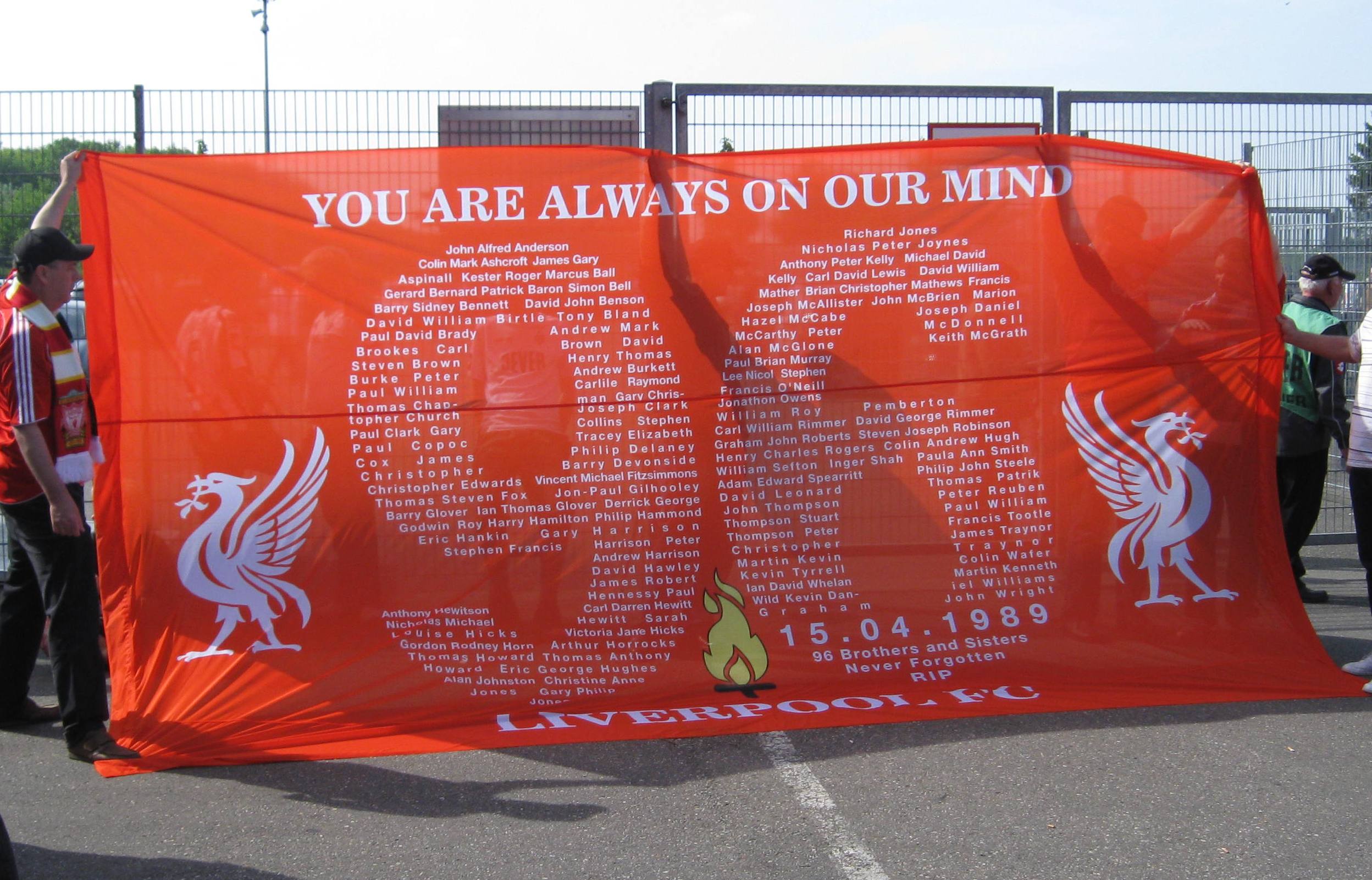
We are in a brief passage of history at the moment where the Police service appear to be in the news an awful lot. Beginning last Wednesday (12 September 2012) with the statement from the Prime Minister, apologising and condoling with the families of the victims of the Hillsborough disaster, where 96 football fans went to watch Liverpool play Nottingham Forrest and never came home. The statement at last seemed to put to bed who was to blame, which for years was the victims as a result of a police smear campaign.

JFT96
News then broke Wednesday morning (19 September 2012) of the killing of two police women in Manchester, after an apparent hoax call, leading the two officers into a death trap. 

Within 24 hours the Police were once again at the center of a media storm, as Chief Whip Andrew Mitchell allegedly shouted abuse at Police guarding the gates to Downing Street for not letting him through on his bicycle. The claims made by the Police include Mitchell shouting "do you know who I am?", "...best learn your place", "I'll have your jobs for this" and "...you're fucking plebs".

Dubbed as "Mitchellgate", "Plebgate" and "gategate", the story raises the important point of status and position in British society. 

Thrasher
While some may or may not agree with the methods used by the Police, but there is no doubt in this situation, someone has gotten above their station and used their status as a means to try and quieten the other into submission. 

On the one hand, the Police could be seen as being too unreasonable in this instance. Let the man through on his bike, no harm done, Mitchell gets home 5 minutes earlier. Or, as was the case the Police stick to the protocol laid before them, and do not allow Mitchell to pass through security. As a result, Mitchell kicked off. 

Now, the Police no doubt will be given tongue-lashings invariable around the country, infact i'm sure the Police have probably heard a lot worse on a Friday night outside nightclubs. This however is not the issue in my opinion. 

What's gone on here is a Cabinet member to get above his station. Using his power, threatening to "have his job for this" is unacceptable. The power bestowed on him by David Cameron, can just as easily be taken away by him, if not the electorate in the next general election. There is no absolute and infinite power MPs have. Serving Government and the people should be a privilege, not something used a bargaining chip in the game of life. He should be asked where he gets off on the idea that status, position and power should be a means through which he can be treated differently. Had I asked to get through the Downing Street gates, then called the police "fucking plebs", i'm sure I would have walked away in 'cuffs. 

In a social democracy, we should be able to resolve conflict such as this through sound reason and judgement, not resorting to a "my-dads bigger than your dad" esque confrontation. While perhaps not role-models, a Politician of his position should not let down the electorate by making such remarks. 

Already dubbed as "thrasher" for his tough persona, Mitchell has not helped his cause here. "I'm the Chief Whip" may well impress the bourgeoisie, but it won't impress the likes of the working-class. The gap between Politician and electorate is something, in my view, we need to eliminate in order for politicians to be more accessible. Stories such as this do no good. Cameron should make a stand and have Mitchell stand down in order to make the point that in reality, MPs are just elected members of society, not social heavyweights who can bully their way through life. 

Thursday, 20 September 2012

Nick Clegg - A Political train wreck?

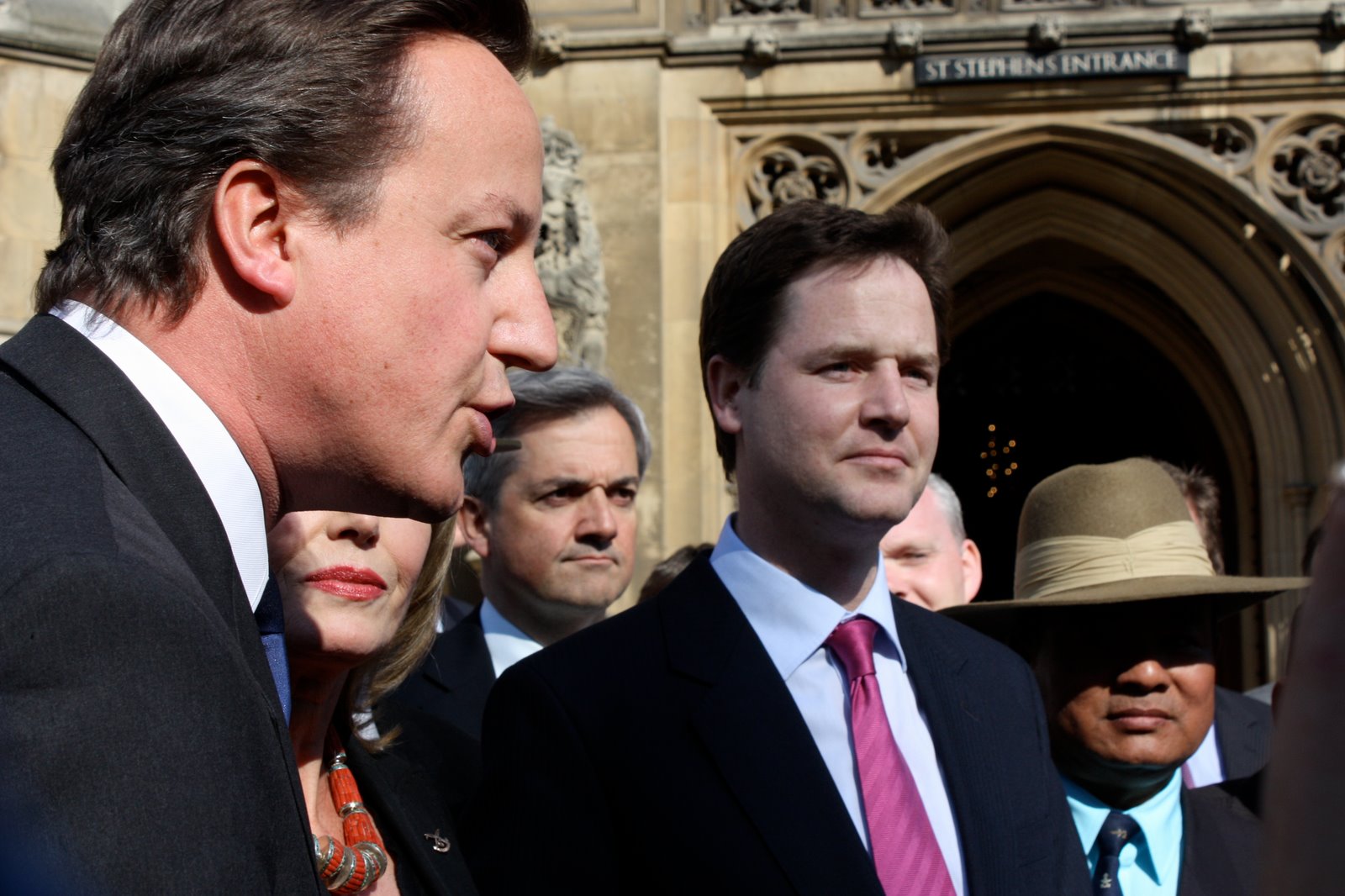
Nick Clegg, with David Cameron and Chris Huhne
Okay, so this week Liberal Democrat leader Nick Clegg made a heart-felt apology, filmed in his own home, with regards to the raising of tuition fees for higher education students. Signed into effect as the The Higher Education (Higher Amount) (England) Regulations 2010, this year marks the first intake of students that will have to pay higher fees to go to university: a maximum of £9000 will now be charged to university students compared to to previous maximum of £3200.

Within a day of making the apology the video had appeared on YouTube as a remix "Nick Clegg Apology Song - Sorry." No sooner had that appeared before Clegg had latched on and given his approval for the song to be commercialised, with profits going to charity. There is of course a serious point to all this: it rather does emphasise the ridiculous nature of the whole affair.

It seems to me like a completely misjudged attempt at redemption, dreamt up by the office of the Deputy Prime Minister.

To begin, he wrongly makes the point that he was wrong to make a promise that in reality he could not follow through on: i.e. we could not afford to NOT raise tuition fees. While some may be accepting of this and others quick to reject it as an excuse, it raise an important question about his party's ability to govern. Having a grasp of what one can and cannot afford is important in all walks of life, especially so in Government. Not being able to afford to keep the cap in place should have been something his party should have known - given the importance of the issue to many of their core voters: students. In ability to foresee this issue raises questions about their ability to Govern.

Dr Vince Cable
Secondly, I would suggest that there are instances where apologies are appropriate and others where they are not. I remember when I was younger, mother would tell me and my sister off when something happened, and the blame was sometimes (rarely) not squarely left on my shoulders. I would profess "I'm not apologising for something i didn't do." Perhaps a poor example, but again it raises an important point: apologising here does all but apportion the blame fully on his shoulders. It's an unfortunate position to be in, but let us remember the following: the Statutory Instrument was passed in Parliament offering all MPs a chance to vote on the issue, 21 Liberal Democrats voted against whereas 28 Lib Dems voted in favour, and of course former Liberal Democrat deputy leader and current Secretary of State for Business, Innovation and Skills spearheaded the bills development. All this considered, it is very much a "team responsibility" if you will, rather than the blame resting solely on the one man. I would therefore consider "the apology" very damaging for Clegg. We live in something of a blame culture i believe, and rather than sharing the blame, by appearing in the video he has taken the flak himself.

Finally, one has to consider his image, and how it has been effected by the apology video. As mentioned briefly above, it rather does entrench his position as the Liberal Democrat scapegoat. Had the video been spun (sorry, Government's don't spin) written in a tone of "honest explanation" rather than an grovelling apology, he might have come out with his head held slightly higher. Instead, I believe his reputation and image in the public eye is left in tatters, because in reality "I'm so Sorry" is something I have said to numerous ex-girlfriends, not something i would like to have said to me by the deputy Prime Minister.

With the conference coming up, one has to wonder, how will Nick Clegg will perform; and perhaps more importantly will his performance be well received by party members. If the Liberal Democrat members are getting restless, the time for a leadership election is coming, infact with the election less than 2 and a half years away, the time might be now.

Monday, 10 September 2012

Madden 13: Something completely different

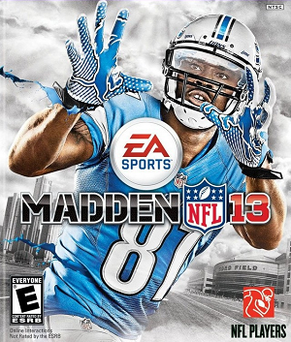
So I bought the latest installment of the Madden Franchise, Madden 13, on August 31st, and at last I have had a chance to scour the games new features in order to give you a bit of a review. This is of course the European version of the game I, it may well differ to the NA version, in which case I do apologise. I'll break it down into different sub-categories for you.

Gameplay

The game is now fronted by Phil Simms and Jim Nantz, both CBS broadcasters for real-life NFL coverage. The new feature includes commentary from the guys, as well as a brief 30 second clip of them talking about the match up. If the match is being played between two rivals (Cowboys versus Eagles for example) you get some good discussion about the rivalry, however if it is something of a nothing game in terms of rivalry or interest, the two will just talk generally about "the importance of matches late in the season" and "the two defences will be hunting down the oppositions QB". It's a shame there aren't more sound bites from the two, in order to make the pre-match build up more complete. The commentary in-game however feels much more complete, with evidently over 9,000 unique pieces of commentary. Having said that however, Nantz always seems to manage to throw in "The QB had so much time there, i'm sure you could have even made that pass!" at Simms.

The players now feel more real, particularly during the running game. Rather than just smashing into the line and hoping a gap appears and you'll slip through in previous Madden games, the user must now be patient in choosing their running lane. In Madden 13, if the running lane just isn't there, the running back will bounce off the O-Lineman, or lose his balance and fall over. Further, if the running back runs toward a player who has fallen over, the running back will trip if the user fails to jump over the fallen player. This makes the experience slightly more realistic, if not also more difficult.

Franchise mode/ Connect careers

I tend to spend much of my time playing Franchise mode. This year however, Franchise mode has been replaced by "connected careers". I would compare this replacement to franchise mode as more of a "Coach mode", whereby you put yourself into the game as a coach rather than a general manager. With the inclusion of EA Sports Gameface, you can take a picture of face, and have it rendered to actually feature in the game. This works with either "Coach Mode" or "the old Superstar mode".

Franchise mode used to be famously easy to manipulate in terms of trading players and getting picks. All "tricks" aside about how to create a team of all-stars, it is now much harder to get involved in trades. The game includes the option to trade draft picks for the upcoming draft and the following draft. Considering this, DeMarcus Ware, plus my 2013 and 2014 first round picks was not enough to lure Cam Newton to Cowboys Stadium. Teams can no now longer simply pay kings-ransoms for a player of their choice - if you're trading for a starter or franchise player, you can forget about trying to get him into your team. Instead you must be more calculated in your approach to trading. You must first consider which player you are willing trade away, and then trade with a team who are "in need" of a player in that position. You are given a hint of how interested the team are in your trade, but from this point there is no guarantee your trade will be successful. While this is perhaps more realistic (you rarely will see a franchise QB/RB switching teams), it makes the came slightly less enjoyable. As a Cowboys fan, I would always look to trade away either Marion Barber/Felix Jones and a couple of draft picks for a future HoF RB - those days i'm afraid to say are no more.

The game therefore creates greater emphasis on free agency and future draft picks. The Free Agency period during the off season is much more in depth and more competitive between teams and players. Drafting is also very much reliant on scouting. During the draft, teams can "trade up" while a team is on the clock, as well as there being a running commentary about who has picked who and which college they came from. This makes the Madden NFL 13 Draft experience unique, and in my opinion the best yet.

A new feature of the game is players coming out of retirement a la Deion Sanders. I was pleasantly surprised to find Kurt Warner available in free-agency - with a generous 87 rating, I snapped him up.

That'll do for now. As i play more i'm sure i will uncover more about the game, and when I do i'll be sure to post. Please comment and share if you liked what you read.

Friday, 13 July 2012

I didn't like the amazing spiderman

Self-explanatory post this really. I didn't like The Amazing Spiderman, a film adaptation of a comic book series, released July 2012. That's about the gist of this post, if you've had enough move on, if not, read on and i'll give my two cents about what was wrong with it, in 5 sections.

Comparisons

Having seen the film with some friends, some feedback i received from those with me was "It was so much better than the Spidermans with Tobey Maguire!" I haven't seen those films, infact, I lie, i saw about half an hour of the first film before falling asleep. Going on this, I never watched it/any of the other Tobey Maguire Spidermans ever again. Perhaps to my advantage, I didnt have to watch this film through shit-tinted spectacles (which were given out to all viewers of the first three Spiderman films). Now, i enjoy the TV show Scrubs, but I don't compare the most recently seen episode to the last in terms of enjoyment, so I didn't for this film. Hence, it may have been better than the others, but it was still poor in my book.

Arrogance

Again harking back to Tobey Maguire (daft way of spelling the name Toby by the way), it is evident that he played Spiderman with a monotonous indifference to everything around him, friend or foe, love interest or villain. Hence again, some people i've spoken to enjoyed Andrew Garfield's on screen cocksure attitude. Watching the film through blinkers so to speak, he was just sure a far too cocky, far too sure of himself for a teenager. To put things in perspective a little, this character is an orphan, and during the film saw his Uncle (who was his defacto father) get shot AND got a ridiculously harsh community service punishment for "making a fool" out of one of the school bullies (despite having had the Bully earlier clock him in the jaw). Now, for a man who has been aggrieved and luckless in his young life thus far, he was remarkably arrogant. I'm not suggesting that they should have trodden on The Dark Knights toes, but really what had happened to Peter Parker should have resulted in him being a bit more angsty when in the spidey suit.

Plot filler? 

Despite only being 136 minutes long, it felt like one of the longest films i've ever seen. Me and the chap next to me in the cinema would frequently lean toward one and other and make some kind of smarmy remark about "How long is this film??" and "When's he gonna start fighting the bad guys??" Both justified statements, I probably wouldn't be far off in suggesting that we have to wait about an hour until anything remotely classed as action happens. Between the beginning and that point, it just seems like unnecessary filler: Oh my word estranged teenager, bit of an outcast at school, has the hots for someone, oh my god she works at the same firm who her dad works for, haha cheap laugh, ooh they're going on a date! etc etc... Really, when you tot it all up, Spiderman only engages in two note worthy fights, both with The Lizard (I looked the name up, that's the baddies name if anyone was wondering), one on a bridge and the other on the HQ of OsCorp. Not much really, considering IMDB describes it as an Action, Fantasy, Adventure, Thriller.

A massive waste of everyone's time

No, not the film. Here i'm referring to the Peter Parker's relationship with love interest Gwen Stacey (played by the lovely Emma Stone). It's a bit will they won't they for the first half of the film. At a good 20 years and a half old, I don't wish to sound arrogant but i must say i'm above all the teen romance bullshit, so in truth i didnt so much get into that aspect of the plot. They then kiss and it's quite nice. Then after a secretive relationship, he goes round to the Stacey's for dinner and doesn't get on with the father (been there). The father of course is a police commander, and being Spiderman (a vigilante) there is a conflict of interests. The relationship goes on, and when the Police Commander eventually finds out Peter is Spiderman, there is a swing and all of a sudden he trusts him, and lets him out of police custody to get The Lizard. After it's all done, and the dust has settled, the two unlikely partners in bringing down the evil villain share a moment. The dying Commander, asks Spiderman to "leave Gwen out of it." Now, in my head for some reason i assumed he meant "don't turn her into your sidekick, leave it in the bedroom, you know what i'm saying...?" Well, he didn't mean that, of course he was on about them breaking up. Which they did. And their whole relationship was a massive waste of everyone's time.

Plot-hole? 

Spiderman came about as the vigilante he is, because he was on a vendetta to find the man that killed his uncle. After several failed attempts, Spiderman moves on with bigger fish (or Lizards) to fry. They never came back to it, and again, i'm wondering if the criminal that shot his Uncle got away with it or not?

Saturday, 7 July 2012

An Elected House of Lords is a recipe for disaster

The temptation to write what would possibly be my fourth "film-related" post was, trust me on this, incredibly tempting. However, for the meantime I shall delay said idea for a blog and return to my blogging roots, harking back to a time when all I bored you with was politics. Compared to my essays on the subject, i'm going to dumb it down a touch, just so it can appeal to world en masse (2,250 hits worldwide in just over a year, whoop whoop).


To my dismay, the Government's House of Lords Reform Bill is set for its second reading on the coming Monday (9th) and Tuesday (10th of July 2010). [I ought to mention to those who don't know, a Bill is a proposal for a policy to be enacted into law, to put it simply]. This is an incredibly important part of the process of law making. The first reading is merely an announcement of the proposed legislation. The second reading however is the meat and drink of the legislative process: The House of Commons will debate and then vote on the issue. Expect there to be fireworks between what should be a particularly busy House of Commons. 


Indeed, unlike other Bills, this is particularly important because it has the potential to change the constitutional framework of the United Kingdom. Now, the United Kingdom doesn't have a written, codified constitution. The United States are of course the prime example of a country that does have such a document, which is often why you hear many controversial issues described in America as "Unconstitutional". The UK, does have a constitution of sorts (that is, an idea of how the country should be run), but it is not found in one place, it is found in several, in Acts of Parliament produced over hundreds of years. Naturally, these Acts of Parliament  get old, and Political Parties tend to fight elections on the basis that they need updating. Classic examples would be an Act of Parliament allowing marriage only to be between a man and a woman; many years ago this was fine, but as countries and indeed democracies develop, opinion changes, and in 2005 an updated Act was passed to allow marriage to also be allowed between same-sex couples. 


Coming back to the reason for the blog, the three main parties (and this happens very rarely) all agree that the House of Lords needs to be updated to be more aligned to  other aspects of the modern political framework. The House of Lords at present is unelected, members exist by virtue of nomination. This is deemed undemocratic by the party machines that exist in the UK. Naturally, the word "undemocratic" is incredibly inflammatory to the public, because often "undemocratic" and "dictatorship" are found very close to each other in the political dictionaries around the world. 


Of course, changing it would be great, but I shall highlight three problems with making the House of Lords an elected chamber:


  1. It will be party dominated - much like the House of Commons, anyone who wants to stand has a better chance if backed by a party. Indeed, anyone can stand for the Commons (famously, Katie Price once stood for election as an MP). However, the electorate tend not to vote for independents and smaller parties. In the bigger picture, they see 1 of at most 3 parties getting into Government, and setting the legislative agenda. A vote for an independent is considered a wasted vote, because of the support that the steam rolling major parties can create. Indeed, the House of Lords at the moment consists of a vast array of intelligent, independent minded members, who contribute massively to the legislative process. People will not go to the polls and vote for Mr Independent on the basis he has contributed massively to medical research (as he would have been nominated to the Lords for). Instead, they will vote for the party, as people do time and time and time again in the House of Commons. The Lords would just mirror the House of Commons in terms of its composition. You think legislation is fastracked through the Lords at the moment? Imagine how quick it would get through, with a Majority in both Commons and the Lords. 
  2. They will have an elected mandate - Gordon Brown as Prime Minister never won an Election as a party leader, hence he was Prime Minister without an "elected mandate" for his Premiership. This damaged his credibility severely, because of the way he inherited his post as PM. Indeed, if the Lords are elected, they will carry an elected Mandate into their role. Great! Wrong. Lords will have been elected in the UK by a proportional system of voting. This is widely accepted as a fairer system, because the amount of votes received tends to equate to the amount of members elected (i,e, if Labour recieve 25% of the vote in the Midlands, expect 25% of Labour candidates from the Midlands to be elected to the Lords). Without wishing to debate the merits and demerits of the system, there is a consensus that a PR system is fairer than the system in place for the House of Commons: a Single-member list system. If members are elected by a fairer system, what is there to stop members saying "Hang on a minute, we're here fairly, you lot [in the House of Commons] have been voted in via safe seats and on 36% of the popular vote, what we say is far more legitimate than what you say!" The point is, the Lords may well get into a position where it is superior to the Commons, which would upset the political system of the UK (the Prime Minister would thus be drawn from the "unfair" House of Commons).
  3. Loss of expertise - I pose the question, will my University Professor stand if the House of Lords become elected? Well, I did ask him that and he said he wasn't sure. In reality, as a Conservative member of the House of Lords, he would only be able to stand if endorsed by the Party. Punch Lord Norton into Wikipedia, and you will find the quote  "the United Kingdom's greatest living expert on Parliament". At the moment, he can weigh in during the legislative process, something i quite like the idea of, particularly if the debate is with regards to anything about our political system. An elected House may well exclude such experts, as indeed its very much down to the parties as to who gets in and who doesn't. It would become a chamber not so much of experts, but loyal party candidates, who are more than willing to vote inline with the party. At present there is a very lax whipping system in the Lords, regardless, there is no majority in the Lords because of the existence of 181 independent cross benches. 
Indeed, I would suggest three good arguments, as to why the Lords should be kept as it is.